
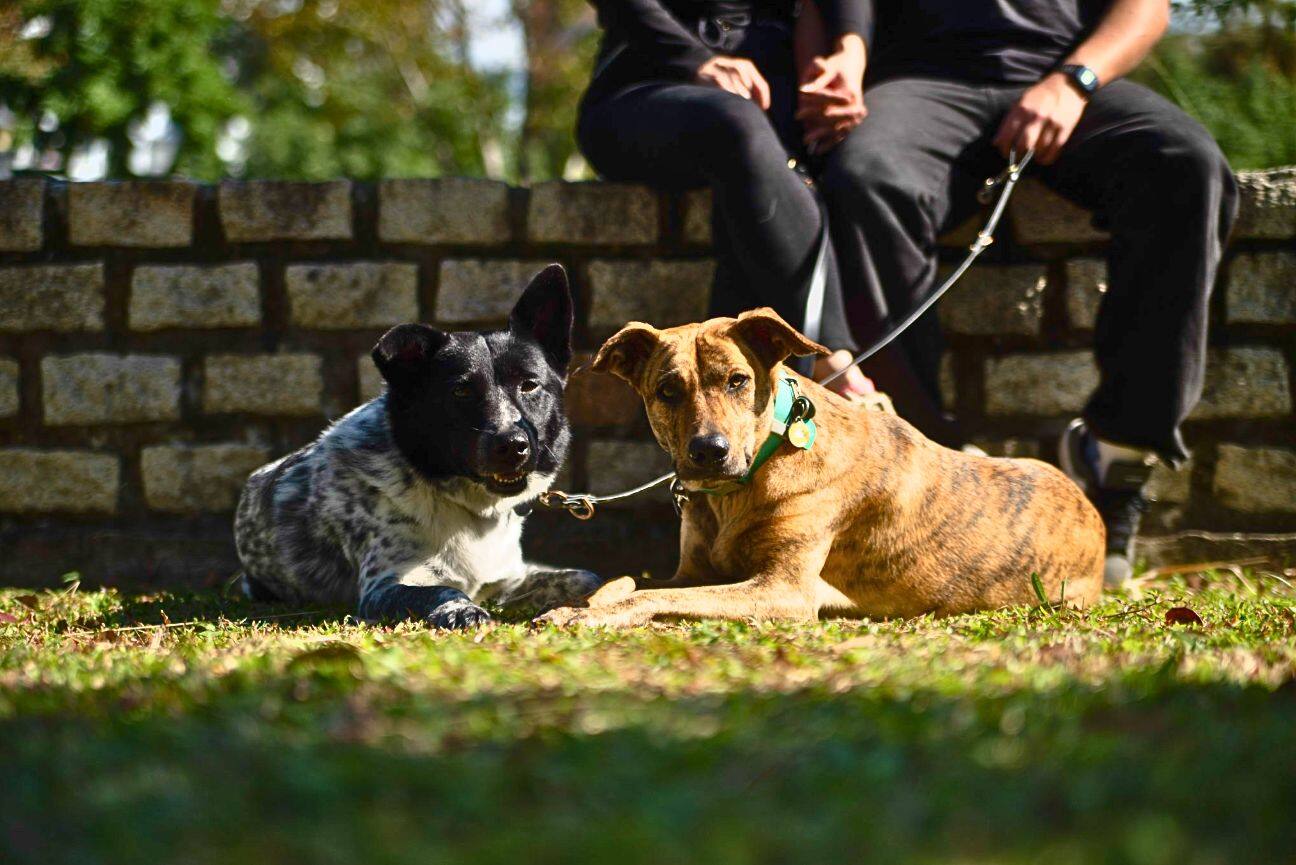
Relocating Pets Between Taiwan and Brazil
Brazil does not ask for a rabies antibody test, which makes it sound like an easy destination. It is not. The International Veterinary Certificate that admits your pet is valid for 60 days from issue, but it can only be issued within ten days of a clinical examination, after an antiparasitic treatment given within the previous fifteen days, and then endorsed by APHIA — a sequence that has to be run in order, in Taipei, before a journey of well over a day through at least one connection.
Updated on , verified by 886JetPet
One corridor, two rulebooks
Brazil's Ministry of Agriculture (MAPA) sets the conditions and its border service, VIGIAGRO, inspects on arrival. There is no quarantine and no titer, but there is very little slack: the certificate, the antiparasitic treatment and Taiwan's own export inspection all have to land inside the same narrow stretch of calendar. Coming back, Taiwan's APHIA applies its full rabies-infected-origin protocol.
| Direction | Classification | What it means in practice |
|---|---|---|
| Taiwan → Brazil | Brazil (MAPA) admits pets on an International Veterinary Certificate, without titer or quarantine | An ISO microchip implanted before vaccination, an inactivated rabies vaccination with its waiting period served, internal and external antiparasitic treatment within 15 days before the certificate is issued, a clinical examination within 10 days before issue, and a CVI valid for 60 days from issue. |
| Brazil → Taiwan | Taiwan (APHIA) does not list Brazil as a designated rabies-free area | Titer of at least 0.5 IU/mL sampled 90 days to 1 year before arrival, an e-permit at least 20 days ahead, and 7 days of post-entry quarantine unless one of APHIA's waiver routes applies: the blood was sampled 180 days to one year before arrival and either the import permit was filed at least 120 days ahead or the permit was filed at least 20 days ahead with the laboratory or the exporting country's quarantine authority sending the passing report to APHIA directly; a pet tested in Taiwan before export and re-entering within one year of that sampling is also exempt. |
Quick compliance checklist: Taiwan ⇄ Brazil
Corridor-specific requirements only — the universal basics (ISO chip before vaccine, IATA crate, live-animal flight space) are covered once on the Pet Travel Hub.
| Requirement | Who rules it | Critical window |
|---|---|---|
| TPE → GRU/GIG: International Veterinary Certificate (CVI) | Brazil MAPA, endorsed by Taiwan APHIA | Valid 60 days from issue for entry into Brazil (MAPA's FAQ; confirm against Portaria 741/2024), but it can only be issued within 10 days of the clinical examination and must be endorsed by APHIA before departure |
| TPE → GRU/GIG: microchip | Not required by MAPA for entry; needed for the return to Taiwan | MAPA does not require a microchip for entry into Brazil, but Taiwan's re-entry rules and most airlines do — we chip before vaccination anyway |
| TPE → GRU/GIG: rabies vaccination | Brazil MAPA | Inactivated vaccine for pets over 3 months; allow at least 21 days after a primary course, and budget 30 to be safe on a first vaccination |
| TPE → GRU/GIG: internal and external antiparasitic treatment | Brazil MAPA | Administered within 15 days before the CVI is issued, and recorded on the certificate |
| TPE → GRU/GIG: arrival inspection | VIGIAGRO at the port of entry | No quarantine when the file is complete; incomplete documents mean detention at the port until resolved or re-exported |
| GRU/GIG → TPE: rabies titer ≥ 0.5 IU/mL | Taiwan APHIA, via WOAH reference or designated labs | Blood sampled 90 days to 1 year before arrival |
| GRU/GIG → TPE: APHIA e-permit and quarantine | Taiwan APHIA e-permit portal | At least 20 days ahead; for the waiver, sample 180 days–1 year old and either permit ≥ 120 days ahead or permit ≥ 20 days with the lab or exporting authority reporting directly to APHIA; a pet tested in Taiwan before export and back within a year is exempt |
Taiwan's APHIA runs dog and cat imports through its online e-permit portal, with document uploads validated against the microchip record. We re-verify the current protocol on both sides of this corridor for every booking.
The chronological timeline
Read this top to bottom: each step's validity depends on the one before it, which is why a late fix costs months rather than days.
-
Map the routing first T−4 months
- There is no direct service; expect a connection through a Gulf, North American or European hub, and confirm live-animal acceptance on every sector.
- Total journey time still matters: the shorter the routing, the fewer connections to confirm live-animal acceptance on.
- Taipei-bound instead? Six months — the titer draw governs the plan.
-
Chip and vaccinate T−3 months
- Microchip (for the return leg and the airline, not for MAPA), then the inactivated rabies vaccination for a pet over 90 days old, and let the 21-day waiting period after a first vaccination run in full.
- For a first-ever rabies vaccination, plan on 30 days rather than the 21-day minimum; it costs nothing and removes an argument at the border.
-
File Taiwan-bound permits T−120 to T−20 days
- File the APHIA e-permit at least 20 days before arrival. For the quarantine waiver, either file at least 120 days ahead, or file at 20 days and have the laboratory or the exporting country's quarantine authority send the titer report to APHIA directly.
- Brazil-bound: nothing to file this early, which is precisely why people relax and then run out of calendar in the final fortnight.
-
Book uplift and build in slack T−6 weeks
- Choose the routing with the shortest total elapsed time you can, not the cheapest — fewer connections means fewer live-animal acceptances to confirm.
- Avoid connections that would require an overnight in a third country with your pet in transit.
-
The overlapping windows T−10 days to departure
- Antiparasitic treatment, the clinical examination, then the CVI issued within 15 days of the treatment and 10 days of the examination, then the APHIA export inspection endorsing that certificate — a sequence, not a checklist.
- One vet visit, one branch office appointment, one flight, and effectively no room to reschedule any of them.
-
Fly and clear T−0
- Arriving Brazil: VIGIAGRO checks the CVI, the chip and the treatments, then your pet is released.
- Arriving Taiwan: APHIA reconciliation, then home or the reserved quarantine facility.
Moving between Taiwan and Brazil with your dog or cat?
886JetPet runs both directions of this corridor: the export from Taiwan with the APHIA inspection and Brazil's own entry rules, and the import to Taiwan with the titer calendar, the e-permit and the quarantine plan.
- Free initial review
- No commitment
- Reply usually within one business day
What 886JetPet handles on this corridor
Your Taiwan ⇄ Brazil move, fully handled
Track your pet's entire relocation in one live dashboard, unique to 886JetPet
Taiwan ⇄ Brazil: common questions
Does Brazil require a rabies titer test?
No. Brazil admits dogs and cats on an International Veterinary Certificate with a valid inactivated rabies vaccination and recent antiparasitic treatment; MAPA does not require a microchip for entry. The absence of a blood test is why the certificate sequence carries so much weight instead.
How long is the Brazilian certificate valid?
According to MAPA's own FAQ, a CVI issued by another country is valid for 60 days for entry into Brazil (we confirm this against the current Portaria for every move). The short windows sit before issue: the clinical examination within 10 days and the antiparasitic treatment within 15 days of the certificate, then APHIA's endorsement before departure.
Is there quarantine in Brazil?
Not for compliant pets. VIGIAGRO inspects the animal and its documents at the port of entry and releases it. Where documents are incomplete or disease is suspected, the animal is held at the point of entry until the requirement is met or it is re-exported.
What is the antiparasitic requirement?
Internal and external parasite treatment has to be given within 15 days before the certificate is issued, and recorded on that certificate. It is easy to do and easy to forget, and it is checked.
What does it take to bring a pet from Brazil to Taiwan?
Brazil is not on Taiwan's designated rabies-free list, so APHIA requires a passing rabies titer of at least 0.5 IU/mL with blood sampled 90 days to one year before arrival, an import permit filed at least 20 days ahead, and a 7-day facility quarantine. The 7-day post-entry quarantine is waived in any of three cases: (1) the pet was blood-tested in Taiwan before export and re-enters within one year of that sampling; (2) the blood was sampled 180 days to one year before arrival and the permit was filed at least 120 days ahead; or (3) the blood was sampled 180 days to one year before arrival, the permit was filed at least 20 days ahead, and the passing report reaches APHIA directly from the laboratory or the exporting country's quarantine authority (rabiesreport@aphia.gov.tw, or retrievable on the laboratory's website). APHIA makes the final decision, so quarantine space is still reserved.
A day and a half in the air, behind a certificate built in order
Brazil rewards precision at exactly the moment a family has the least of it — the fortnight you are also shipping a household across the planet. Give us the arrival date and we will work backwards through the endorsement, the certificate, the treatments and the routing until the whole thing fits.